
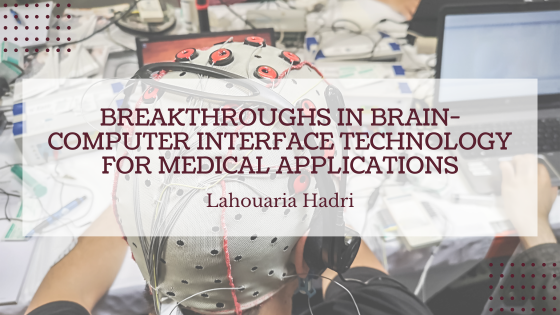
Brain-computer interface (BCI) technology has witnessed remarkable breakthroughs in recent years, revolutionizing the field of medical applications. This article explores the latest advancements in BCI technology and its transformative potential in diagnosing, treating, and managing neurological disorders and disabilities.
Understanding Brain-Computer Interface Technology
Transcending conventional neuromuscular pathways, brain-computer interface (BCI) technology allows direct brain-to-device communication. By detecting and interpreting neural signals, BCIs allow individuals to control computers, prosthetic limbs, and assistive devices using their thoughts alone. Recent advancements in neuroimaging techniques, signal processing algorithms, and neural decoding algorithms have significantly enhanced the accuracy, speed, and reliability of BCI systems.
Neuroprosthetics and Assistive Devices
One of the most promising applications of BCI technology is in the development of neuroprosthetic devices and assistive technologies for individuals with disabilities. Brain-controlled prosthetic limbs, exoskeletons, and wheelchairs offer greater mobility and independence to individuals with paralysis or limb loss. BCI-driven communication devices enable nonverbal individuals with conditions such as amyotrophic lateral sclerosis (ALS) to express themselves and interact with their environment more effectively.
Restoring Sensory and Motor Function
BCIs hold the potential to restore sensory and motor function in individuals with neurological impairments. Neural implants and stimulation techniques can bypass damaged neural pathways, restoring lost sensations or enabling motor control in patients with conditions such as spinal cord injury or stroke. BCIs offer a novel approach to rehabilitation and neural reorganization by interfacing directly with the brain, promoting recovery and functional recovery.
Diagnosis and Monitoring of Neurological Disorders
BCI technology has also emerged as a valuable tool for diagnosing and monitoring neurological disorders such as epilepsy, Parkinson’s disease, and Alzheimer’s disease. Electroencephalography (EEG) based BCIs can detect abnormal brain activity patterns indicative of seizures, enabling early intervention and personalized treatment strategies. Similarly, BCI-driven neuroimaging techniques offer insights into brain function and connectivity, facilitating the early diagnosis and monitoring of neurodegenerative diseases.
Cognitive Enhancement and Augmentation
Beyond medical applications, BCI technology holds the potential for cognitive enhancement and augmentation. Brain stimulation methods can modify neural activity and improve cognitive abilities like learning, memory, and attention. These methods include transcranial magnetic stimulation (TMS) and transcranial direct current stimulation (tDCS). Noninvasive BCI systems for cognitive training and neurofeedback enable individuals to improve cognitive performance and mitigate age-related cognitive decline.
Ethical and Regulatory Considerations
Despite its transformative potential, BCI technology raises important ethical and regulatory considerations regarding privacy, autonomy, and informed consent. Maintaining patient privacy and ensuring the responsible use of neurotechnologies are critical. Regulatory bodies must establish guidelines to govern BCI systems’ development, deployment, and ethical use in medical settings, balancing innovation with patient safety and ethical principles.
Breakthroughs in BCI technology are revolutionizing the field of medical applications, offering innovative solutions to neurological disorders and disabilities. BCI technology has great potential to improve patient outcomes and quality of life in a variety of contexts, including neuroprosthetics, assistive devices, diagnosis, monitoring, and cognitive enhancement. With further research and development in this area, the application of BCI technology to clinical settings could revolutionize healthcare and enable people with neurological disorders to live more independent and satisfying lives.