
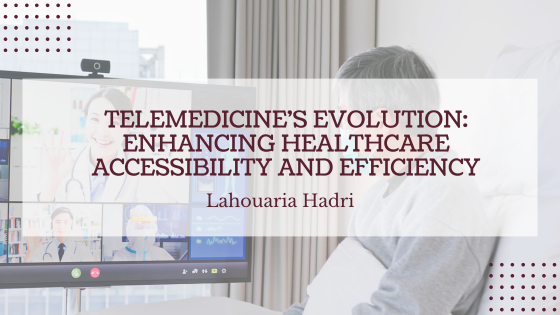
The field of medicine has seen tremendous evolution in recent years due to telemedicine or the use of telecommunications technology to deliver healthcare remotely. This article explores the evolution of telemedicine and its role in enhancing healthcare accessibility and efficiency, particularly in the context of modern healthcare challenges.
Origins of Telemedicine
Telemedicine traces its origins back to the early 20th century when radio and telephone technologies were first used to provide medical consultations over long distances. However, it was only with the advent of the internet and digital communication technologies that telemedicine began to gain widespread adoption. Today, telemedicine encompasses a broad range of services, including teleconsultations, remote monitoring, teleconferencing, and mobile health applications.
Overcoming Geographic Barriers
One of the key benefits of telemedicine is its capacity to cross geographic boundaries, particularly in underserved and rural areas where access to healthcare services may be restricted. Patients can communicate with healthcare providers virtually or through teleconsultations, which eliminates the need for travel and improves access to prompt medical care. This is especially crucial for those who struggle to get to traditional healthcare facilities due to chronic illnesses or mobility impairments.
Improving Healthcare Efficiency
Telemedicine has also emerged as a powerful tool for improving healthcare efficiency and reducing healthcare costs. By enabling remote consultations and follow-up appointments, telemedicine reduces the burden on healthcare facilities, minimizes waiting times, and optimizes resource utilization. Moreover, telemedicine can enhance care coordination among multidisciplinary healthcare teams, facilitating timely communication and collaboration for better patient outcomes.
Enhancing Patient Engagement and Satisfaction
Telemedicine empowers patients to take a more proactive role in managing their health by providing convenient access to healthcare services and information. Mobile health applications, remote monitoring devices, and telemedicine platforms enable patients to track their vital signs, medication adherence, and disease progression from the comfort of their homes. This increased engagement fosters better patient-provider communication, improves treatment adherence, and enhances overall patient satisfaction with the healthcare experience.
Telemedicine’s Response to Global Health Challenges
The global healthcare systems’ efforts to adjust to social distancing measures and slow the virus’s spread was spurred by the COVID-19 pandemic, which also accelerated the use of telemedicine. In order to provide necessary healthcare services while lowering the chance of contracting infectious diseases, telemedicine has become an indispensable tool. Virtual consultations, remote monitoring, and telehealth platforms enabled continuity of care and ensured that patients could access medical attention safely during periods of lockdown and quarantine.
Future Directions and Challenges
As telemedicine continues to evolve, challenges such as regulatory barriers, reimbursement policies, data privacy concerns, and technological limitations must be addressed to realize its full potential. Moreover, efforts to bridge the digital divide and ensure equitable access to telemedicine services for all populations remain essential. Nevertheless, telemedicine holds immense promise in enhancing healthcare accessibility, improving efficiency, and transforming the delivery of healthcare services in the digital age.
Telemedicine’s evolution represents a paradigm shift in healthcare delivery, offering innovative solutions to longstanding challenges of accessibility, efficiency, and patient engagement. By leveraging telecommunications technology, telemedicine transcends geographic barriers, empowers patients, and responds to the evolving needs of modern healthcare systems. As telemedicine continues to advance, it holds the potential to democratize healthcare access, improve health outcomes, and reshape the future of medicine for generations to come.